Architect:
Perkins & Will Architects,
Status:
Completed
Location:
Burnaby, BC
Project Overview
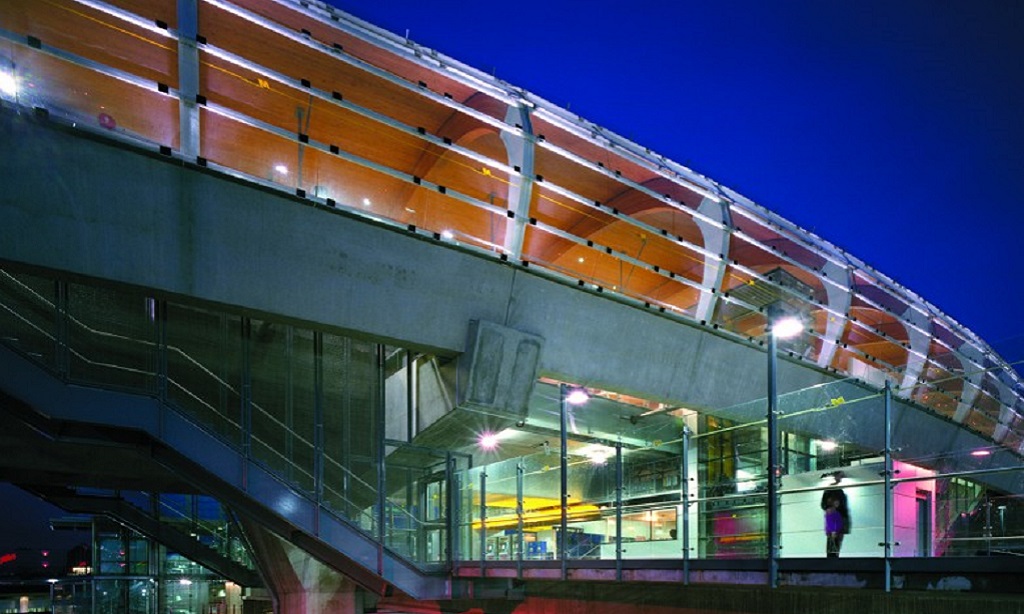
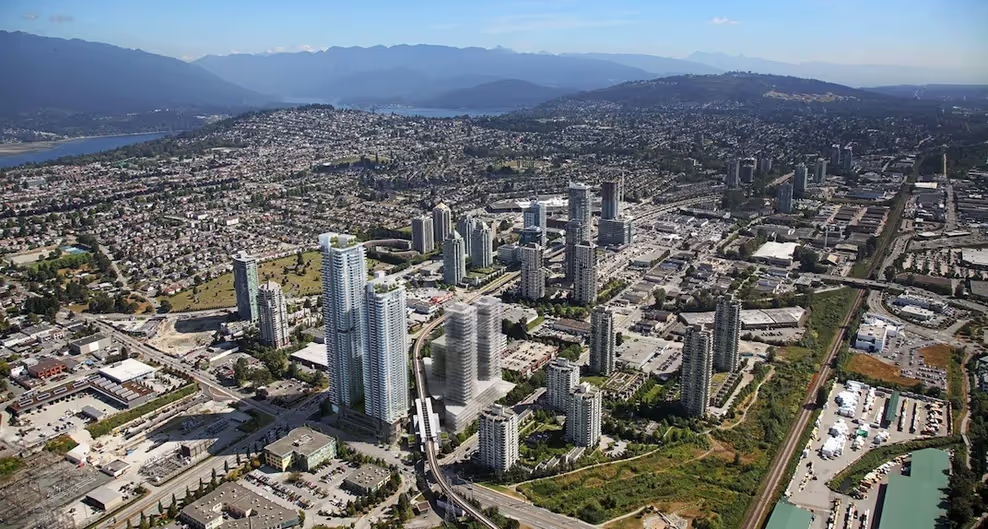
The Gilmore Station Upgrade Project supports TransLink’s long-term strategy to modernize aging rapid transit infrastructure while responding to significant adjacent private-sector redevelopment around the station precinct. Gilmore Station is approaching the end of its capital asset lifecycle and exhibits deficiencies relative to current accessibility, wayfinding, and service delivery standards.
MAKE Projects was engaged to provide constructability and options analysis services for the preferred concept design option—Option 2C: Connected Mezzanine + Secondary Headhouse (Compact). This option integrates new vertical circulation, secondary station access, and mezzanine connections into adjacent mixed-use developments while maintaining continuous SkyTrain operations. The analysis focused on validating Option 2C as a proof-of-concept solution by identifying benefits, risks, constraints, and implementation considerations within a dense urban, transit-operational environment.
Primary Services
MAKE provided constructability advisory services to support concept development and option selection for the Gilmore Station Upgrade, with a focus on buildability, risk, and maintaining uninterrupted SkyTrain operations.
Services included constructability and phasing analysis of multiple concept options, followed by a multidisciplinary constructability review of the preferred Option 2C. MAKE assessed existing station conditions, site constraints, and operational limitations, and evaluated foundation and structural system feasibility. Construction access, staging, and logistics were reviewed in the context of an active transit environment and adjacent development interfaces.
Working as an embedded member of the design team, MAKE collaborated closely with TransLink, Perkins&Will, and other consultants to support early, risk-informed decision-making. The approach included site visits, comparative assessment of upgrade typologies, identification of construction sequencing strategies compatible with live operations, and early flagging of municipal approvals, night work, and stakeholder coordination requirements.
The analysis prioritized solutions that minimized service disruption, reduced interface risk, and improved long-term operational resilience.